
Bridgeport Previous Resident Sources
A backward address trail crosses several eras. Modern parcel data gives the starting key. Deed books and indexes identify owners, while directories and census schedules can identify occupants between recorded transfers. The online IDX has no stated clean cutoff, so older work must include the courthouse and Archives.
| Source | Years it covers | Where held | What it shows |
|---|---|---|---|
| Harrison deed books | 1786-1901 in Archives inventory | Clerk, WV Archives, FamilySearch | Grantor, grantee, legal description |
| Grantor and grantee indexes | 1786-1946; 1795-1967 | WV Archives and Clerk | Seller or buyer path to a deed |
| Area directories | Scattered years, 1905 into the 1940s | ACPL and library collections | Occupant, address, spouse, phone clues |
| Federal census | 1790-1950 publicly released | NARA and library databases | Household at a fixed date |
| Bridgeport permits | Exact run not established | City records request | Owner, project site, work, approval |
For a recent property, start with GIS and the assessor. For a house present before modern parcel systems, begin with the newest deed you can match, then move into land books, directories, census records, and historic plats.
Save Every Bridgeport Address Key
The same Bridgeport place may have a physical address, owner mailing address, parcel number, subdivision lot, district, and older road name. The city occupancy form even separates the property address from the owner's mailing address and another occupant or business field. Preserve each form rather than choosing one as the only correct label.
- Grantor
- The person or entity transferring an interest.
- Grantee
- The person or entity receiving that interest.
- Chain of title
- The linked sequence of recorded transfers for the same land.
- Legal description
- The lot, block, survey, district, acreage, or boundary words that identify the land.
The legal description often beats a street number for old records. It can stay stable when a road is renamed, a house is renumbered, or a mailing city changes.
Trace Harrison County Deeds Backward
Begin in the Harrison GIS parcel viewer. Copy the current situs address, parcel parts, legal description, and current owner. If only the address is known, GIS supplies the parcel key because the assessor form has no visible address field.
- Search the current owner in the Assessor Ownership Search, using last name first or a percent wildcard.
- Open Harrison County IDX and search that owner as grantee or direct party in the likely purchase period.
- Match the legal description, not just the surname. Record the grantor, date, book and page or document number.
- Search that grantor as an earlier grantee. Repeat while the same land description continues.
- When online coverage stops, contact the Clerk or use WV Archives microfilm and FamilySearch images.
Also search wills, fiduciary files, estates, small estates, transfer-on-death instruments, tax deeds, reports of sale, and court-order deeds. Those records explain a change that may not look like an ordinary sale.
The manifest capture of Harrison County IDX shows the portal used to connect Bridgeport previous residents with recorded transfers.

Its broad categories are useful, but the recorded image or certified Clerk copy remains the proof.
Bridgeport's Deep Deed Window
Harrison County's record depth is unusually clear in the WV Archives inventory. Deeds run from 1786 to 1901, the grantor index continues to 1946, and the grantee index continues to 1967. The county formed in 1784, and its first courthouse stood at Main and Second Streets in 1787. The current courthouse dates to 1932.
Those dates do not mean every image is online. Some series are courthouse-origin microfilm, while others reflect film held through Virginia sources. Write down the repository and film source with each citation. No official courthouse fire or confirmed loss was found, so a missing year should prompt a Clerk or Archives question rather than a claim that the record vanished.
Note: The online IDX cutoff is not stated; use the Archives coverage dates as a guide, not as a claim about web access.
Place Bridgeport Households Between Deeds
Deeds identify ownership events, but previous residents may have lived between those events without appearing in title records. A street or criss-cross section can link an address to an occupant in a specific publication year. Bridgeport appears in Clarksburg-area volumes, sometimes under abbreviations, and the published runs have gaps.
- Copy the directory year, publisher, exact street spelling, house number, and every name at that address.
- Check the next available year, allowing for initials, spelling variants, and a missing publication year.
- Pair the result with the nearest public federal census year, using the correct Harrison County enumeration district.
- Return to the deed or land book to test ownership, then use probate or an obituary to explain a departure or inheritance.
The Bridgeport city directory collections supply the shelf details. For a previous-residents trail, each entry serves as a dated bridge between transactions rather than proof of legal title.
Directory wording needs care. A name line may include a spouse in parentheses, a widow mark, an occupation, an employer abbreviation, or a residence code. Later books can add a phone number. Always read the abbreviation key and front matter first. Bridgeport may be a separate section, a Simpson District reference, or an abbreviated place inside a Clarksburg-area volume. An omitted name can reflect a gap in publication or coverage rather than a move.
Ask Bridgeport History Collections
The Bridgeport Public Library history and genealogy page links local news and statewide history resources. Its current page does not list exact house-history holdings or directory years. Ask staff about a known address and date rather than assuming a complete run.
Waldomore is the strongest nearby local-history repository found. It holds regional books, obituaries, yearbooks, church histories, maps, cemetery lists, photographs, diaries, and letters. Fragile archive materials are appointment-only, and catalog call numbers beginning with WALDOMORE or ARCHIVES help identify the collection.
The manifest capture shows the Waldomore collection page used for Bridgeport previous-resident research.
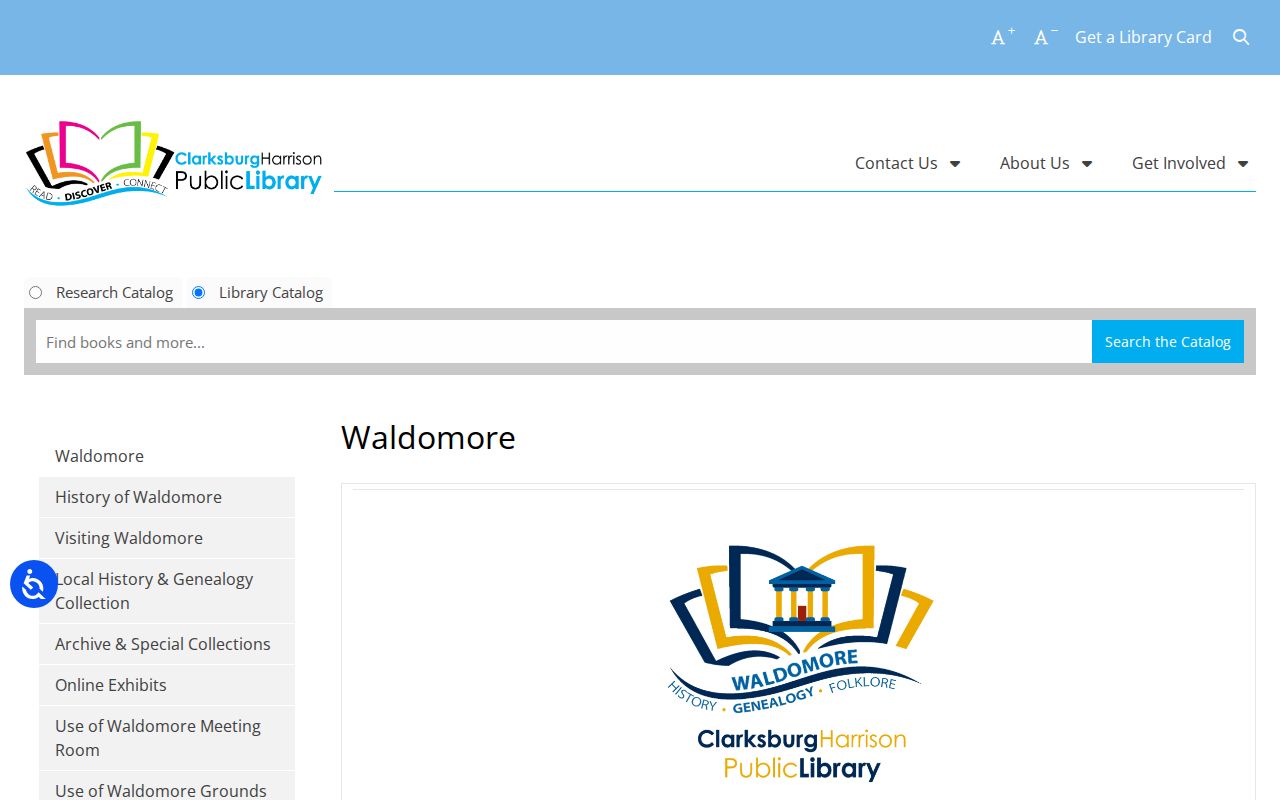
Maps, obituaries, and church or cemetery sources can fill a gap when no directory entry survives.
Resolve Old Bridgeport Addresses
No official Bridgeport street-renumbering year or alias crosswalk was found. If an old house number fails, search the current and former road name in IDX road, right-of-way, and plat records. Then compare Harrison GIS Old Boundary Line, Right Of Ways, districts, and the 911 Addressing Locator.
The 2026 Bridgeport Comprehensive Plan describes growth and annexation work near Charles Pointe and White Oaks, plus coordination with Harrison County and Clarksburg. This can produce future address drift. Save the map date, municipality, county district, postal city, parcel key, and legal description with every historical match.
Date Changes at Bridgeport Homes
A Bridgeport permit can date an addition, roof, pool, remodel, demolition, utility building, or change in use. The application asks for the owner, project site, contractor and license, project type, declared value, flood status, permit number, and inspections. The occupancy form may add owner mailing and other occupant or business fields.
No public permit search was located. Use the Bridgeport FOIA form for a narrow address and date range. The city says there is no request fee, though copies or electronic data can carry costs. A permit names people connected to work, not necessarily everyone living in the building.
Close Bridgeport Previous Resident Trails
Obituaries, wills, probate files, and cemetery records can explain why an address trail ends. The Harrison County Clerk handles estates and probate filings. FamilySearch offers West Virginia wills and deeds, while the Archives inventory lists Harrison wills from 1788 to 1970. Index access and image access vary.
Bridgeport Cemetery adds a distinctive local path. The city formed the cemetery enterprise in 1939 by combining three older grounds with new acreage. Records connect lot owners and burials, and the grounds include pioneer, veteran, former-mayor, and Jewish Memorial sections. Verify a burial or lot fact with the cemetery manager because no city online interment search was found.
A probate detour can restore a broken deed chain. Search the same surname in will, estate, fiduciary, small-estate, and court-order categories. Then compare heirs, property wording, and dates with the next deed. Harrison County marriage bonds reach back to 1784 in the Archives inventory, while filmed birth, death, and marriage series begin in the nineteenth century. Access varies by series and age. West Virginia law generally opens birth records after 100 years and death, marriage, and divorce records after 50 years, subject to protected details.
Lawful use. Trace previous residents for family history, estate work, or curiosity about a Bridgeport home. Never use living-person details to stalk, harass, threaten, or harm anyone.